
Mueller materials estimator app: orders from afield
a mobile quoting tool that turned a days-long process into a 90-second transaction (from the middle of nowhere)
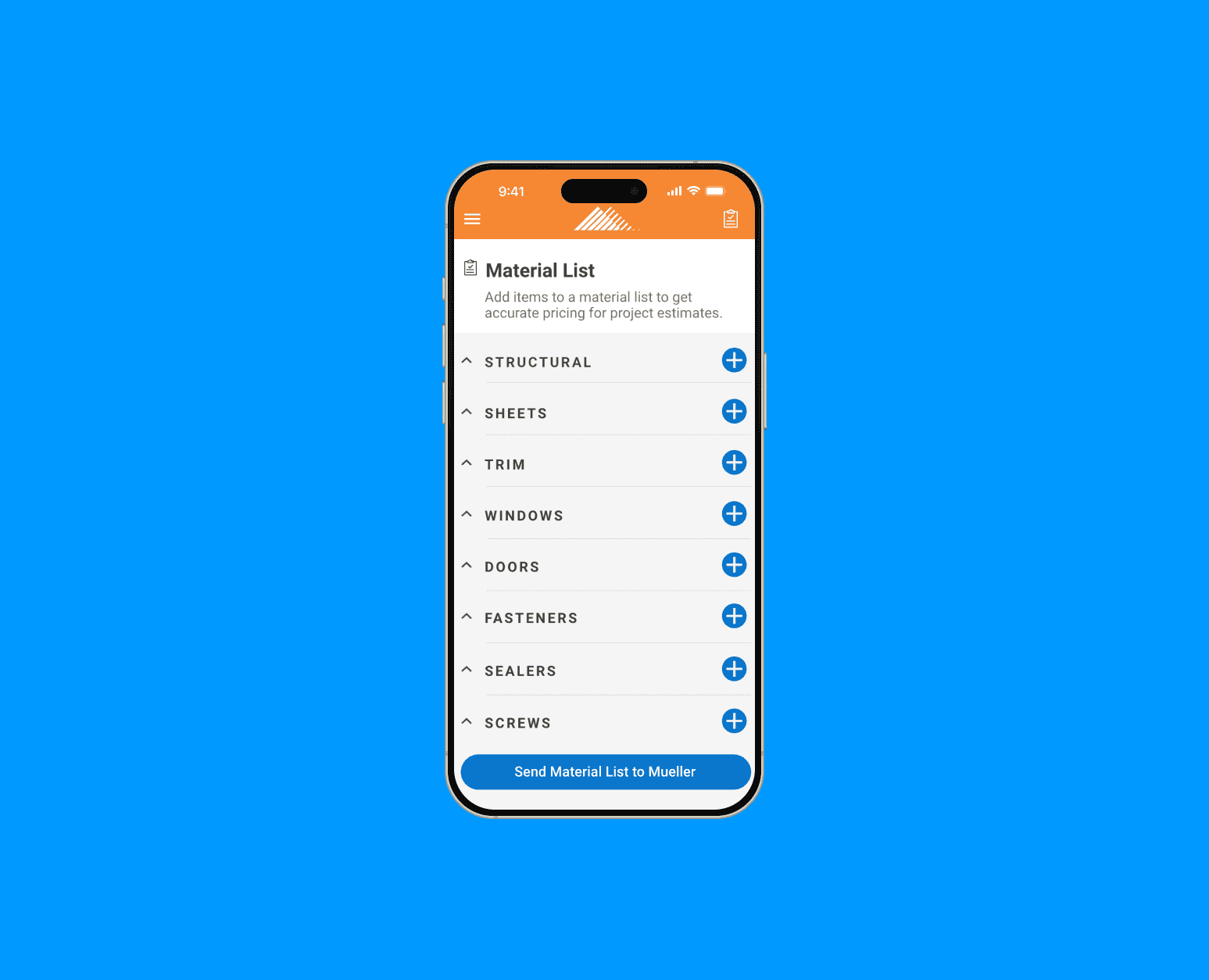
the short version: Mueller’s quoting process hadn’t scaled with their sales growth. Contractors were spending hours on the phone just to get current pricing, or skipping the call entirely and estimating blind. Nobody had asked them what they actually needed.
My IBM Cloud Garage team was tasked to fix it. We rode along with contractors across Central Texas, ran a two-day Design Thinking Workshop to scope the riskiest assumptions, and designed a progressive web app around one persona with four jobs: get pricing, save a quote, manage its contents, and send it to Mueller to place an order.
The interface was shaped by what we’d seen in the field — every design decision mapped to a behavior we’d observed or a constraint we couldn’t design around. It shipped in 9 weeks. Orders came in the same day it went live.
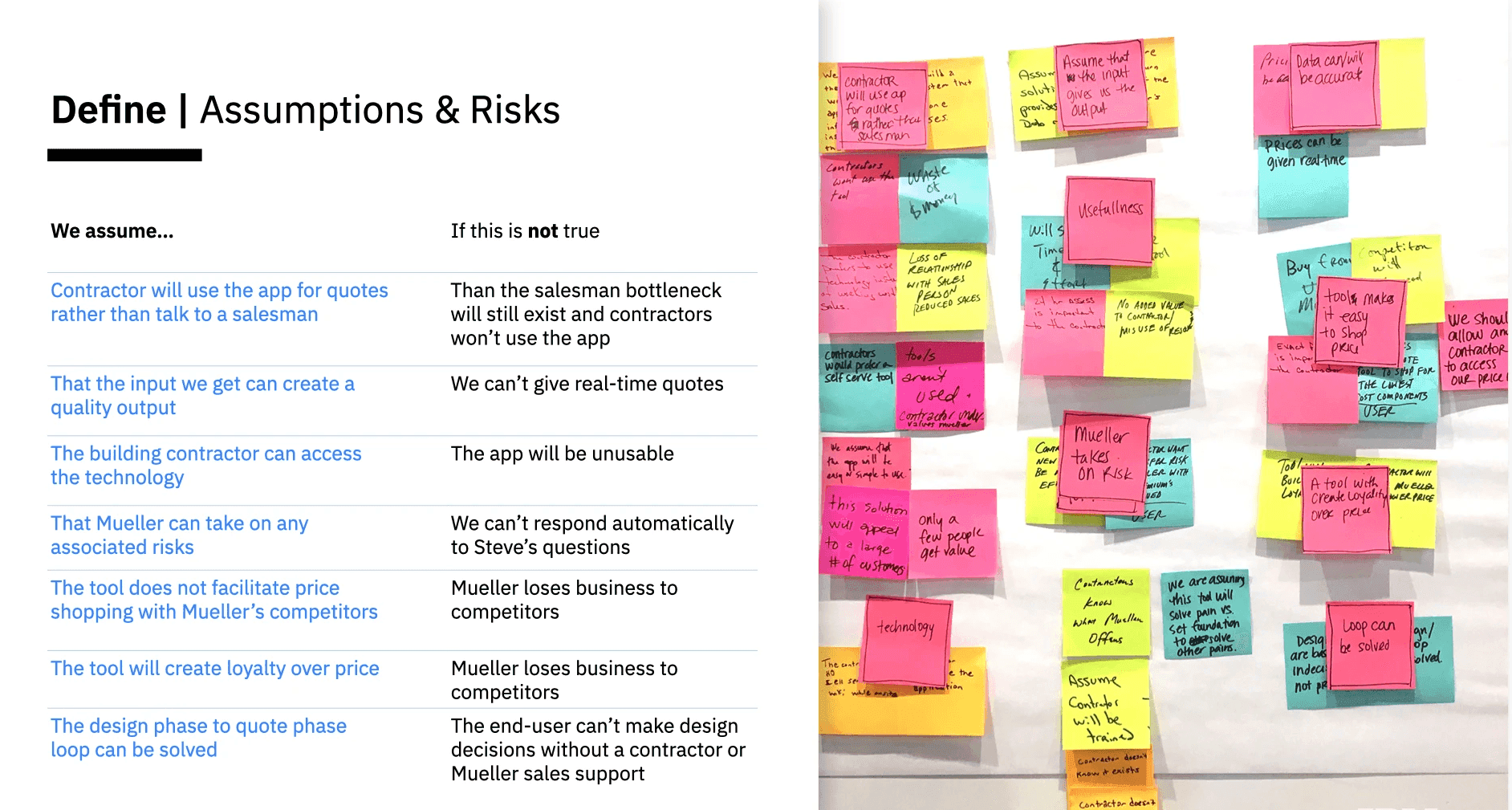
from field research to working software in nine weeks
The IBM Garage Method builds discovery into the delivery structure, so we had the full picture of how to pressure-test for risks and assumptions in the MVP buildout.
Research synthesis. Field research was a treasure trove. Our researchers observed workflows, workarounds, and direct quotes about where the process was breaking. I synthesized those findings alongside my own follow-up interviews into contractor personas and design principles that shaped the MVP.
Design Thinking Workshop. Mueller stakeholders came to the IBM Design mothership in Austin and spent two full days with the Garage team. The critical output from the workshop wasn’t the empathy maps or storyboards — it was naming our two riskiest assumptions: would contractors self-serve instead of picking up the phone, and could the tool make it easier to price-shop with competitors? Getting those on the wall upfront kept scope honest.
MVP scope. One contractor persona. Four core jobs: get real-time pricing, save and name a project quote, manage its contents, and share it with the Mueller sales team to place an order. Everything else got cut.
Prototype → test → build. Clickable prototype within two weeks. Tested with fifteen contractors across three Mueller locations. Findings incorporated before build. User stories scoped to half- or full-day increments, daily standups keeping design and engineering in lockstep. Mueller’s product owner had full visibility throughout. Eight weeks later, the product was live.
“This tool was going to be such a strategic portion of our connection to customers that we couldn’t afford to mess it up. So that's why we brought in the IBM Garage.”
— Mark Lack, Manager of Strategy Analytics and Business Intelligence, Mueller Inc.
designing for the way contractors already think
This wasn’t an app that asked people to learn a new system. Every interface decision mapped to a behavior we’d seen in the field — and the constraints we couldn’t design around.
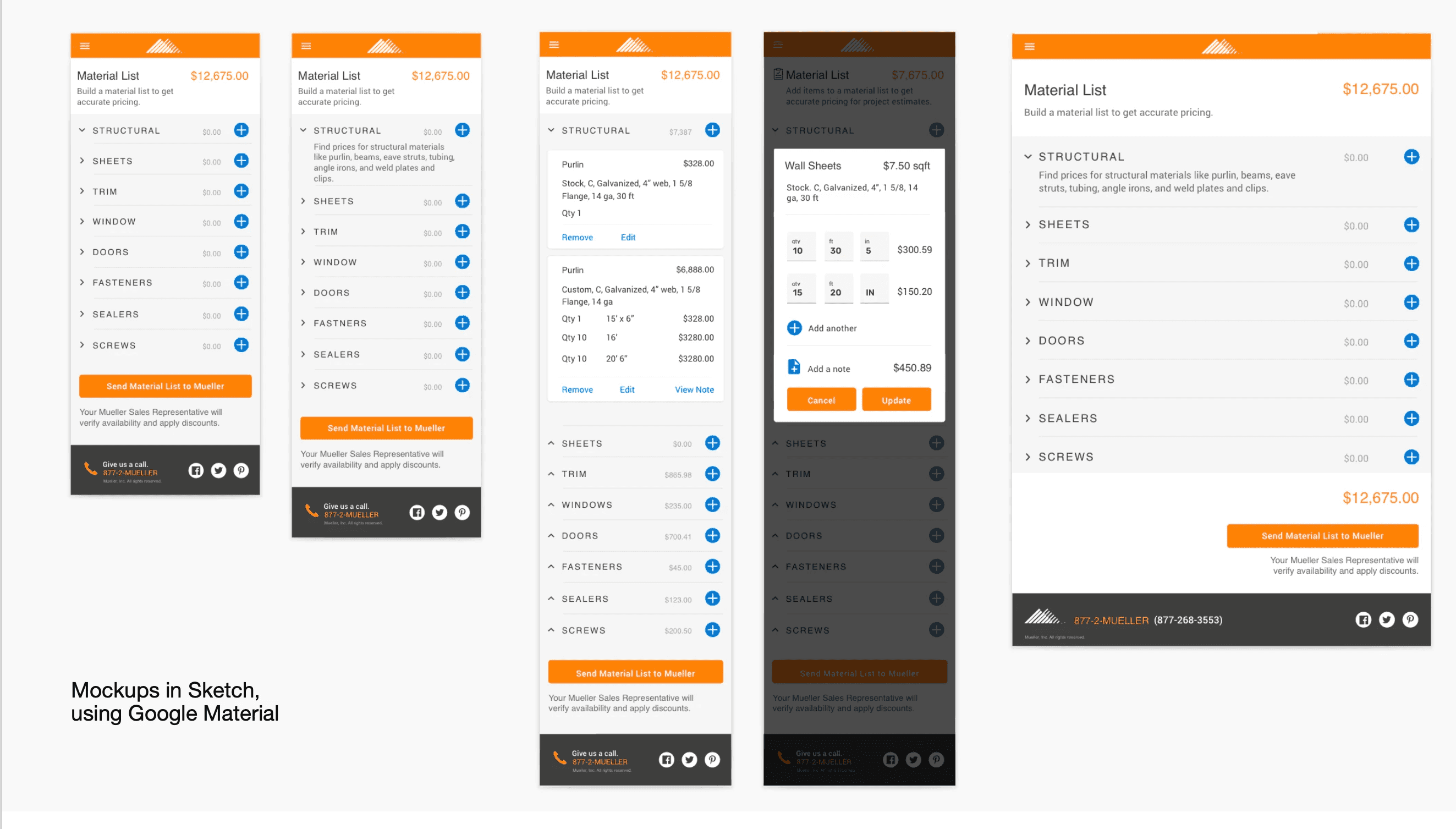
The material list mirrors how contractors already build a quote. The category structure — structural, sheets, trim, windows, doors, fasteners, sealers, screws — follows the order that contractors think through a project. We didn’t invent a new mental model. We mapped the one they already had into accordion panels, so the interface felt like an organized version of their legal pad, not a replacement for it.
The running total is always visible. The price sits pinned at the top right of the screen, updating live as items are added. This was the direct answer to “doing it blind.” No more estimating from memory or calling for current numbers. The contractor always knows where the quote stands.
Progressive disclosure carries the tech-fluency range. The screens move from an empty state with just category labels, to expanded categories with material descriptions, to a fully populated quote with inline editing. A first-time user can orient themselves by reading; an experienced user can blow through the flow without friction. That solved the tech-fluency gap without building two separate interfaces.
The CTA says “Send Material List to Mueller” — not “Submit” or “Place Order.” That language was deliberate. Framing the action as sharing with a person rather than submitting to a system lowered the trust barrier for contractors who’d been calling their rep for fifteen years. Directly below the button: “Your Mueller Sales Representative will verify availability and apply discounts.” A human is still in the loop. The tool augments the relationship — it doesn't replace it.
Mueller’s phone number is visible on every screen. A safety net. If something goes wrong, if the interface feels unfamiliar, if you just need to talk to somebody — the escape hatch is always there. That’s how you earn adoption from users who didn’t ask for a new tool.
We chose a PWA and Google Material Design for the same reason. No app store friction. No install barrier. Runs in any browser. Caches what it needs and syncs when signal returns. Material Design gave us familiar patterns, high legibility, and touch targets sized for work gloves.
These weren’t visual design choices. They were trust decisions — each one shaped by what we’d heard in the field and pressure-tested against the constraints that mattered most.
Mueller didn’t just adopt the app, they adopted the whole approach
Mueller came to IBM for a mobile quoting tool, and they left with a new way of working.
Contractors could configure specs and get guaranteed pricing in the field without calling, waiting, or making blind estimates. Sales reps were freed from the days-long quote-revise-resubmit loop. Customer satisfaction improved. Referral business grew.
But Mueller got a bonus they hadn’t anticipated when they hired us. Their CEO watched how we'd worked through the problem — field research first, evidence before the build, testing with real users before committing — and mandated the methodology across the entire business. Our app was proof of concept for something bigger: structured, human-centered problem-solving produces better outcomes than intuition and speed alone.
“This is the type of problem-solving approach I want the company to take. It’s going to help Mueller stay nimble as we continue these development systems in the future.”
— Brian Davenport, Chief Executive Officer, Mueller Inc.